Art and Grief <3, I really love ''Blue Monday''

On Monday this week I got the worst news of my life.
I’ve been thinking a lot about the “Blue Monday’’. Annie Lee’s 1985 masterpiece ,you know the one that depicts a weary woman sitting on the edge of her bed, hunched over and struggling to find the energy to start her work week.
I really love when I notice movies take their visual references from art. It makes me feel cultured, like, Yeah… I know art. The most recent time I caught a reference was in the 2025 Netflix film Straw, starring Taraji P. Henson. There’s a scene where Taraji’s character, Janiyah, is getting out of bed, and the composition is a direct mirror of Lee’s painting. I wonder if the painting was in the treatment… or storyboard Yeah.. I know film too


The hunched shoulders. The lack of energy. The recurring nightmare of a Monday morning.
These two art works have been plastered in my mind for a while now thinking about how, for Black women, silence usually lasts right up until the “last straw.”
Annie Lee
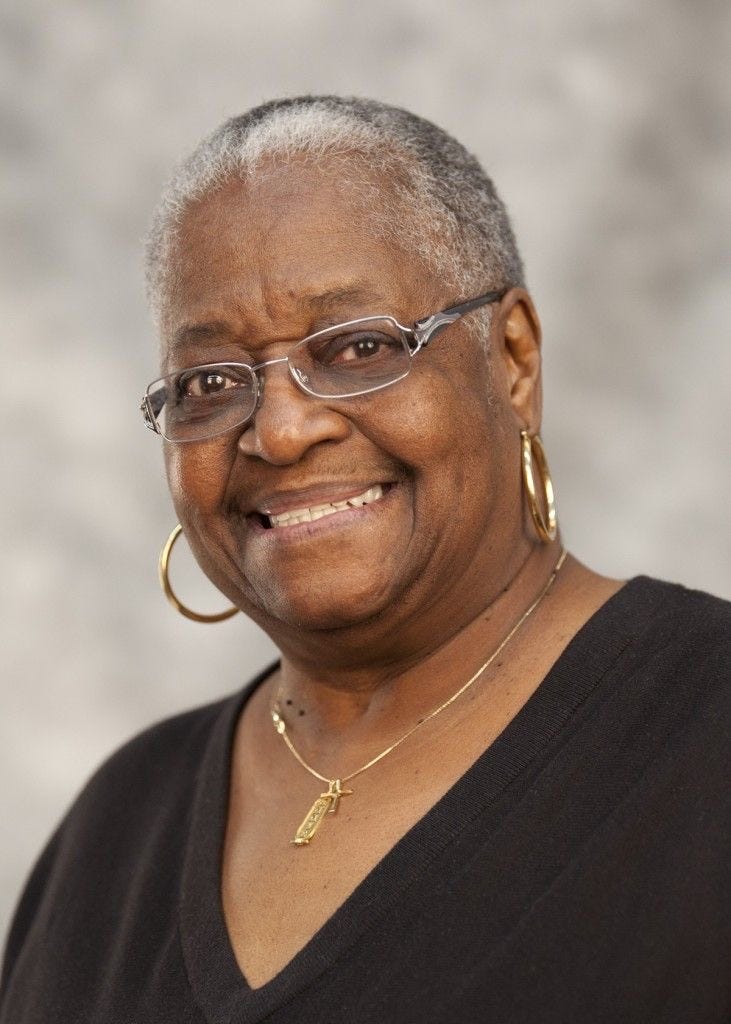
She was a child prodigy who turned down a scholarship to Northwestern University to marry and raise a family. She lost two husbands to cancer. She raised a daughter and a son while working as a chief clerk for the Northwestern Railroad in Chicago.
She didn’t start her professional art career until she was 40. For eight years, she worked that railroad job by day and studied art at night, eventually earning her Master’s from Loyola. That “Blue Monday” painting was real life.
‘’As an adult, one Monday morning at five o’clock as Annie Lee tried to get it together, she came up with “Blue Monday.” She wondered if anybody else felt as bad as she did having to go out on that cold winter morning to catch the bus to work.’’
Well, yeah, Annie. We do. Too many of us experience that dread the recurring fatigue, the recurring trauma of being stuck in situations that feel like a loop. And the thing about loops is that eventually, they have to break.
I’m not a fan of how Tyler Perry writes Black women. As realistic as it can be, it sucks to watch. It often feels like he loves to kick a woman while she’s down. Especially in Straw. It’s a good movie with a twist; while we’ve seen variations of this kind of twist before it absolutely rips your heart out in this context.
‘‘Straw tells the story of a single mother doing everything she can to care for her sick child while trying to stay afloat financially. What begins as a simple goal—bringing $40 to her daughter’s school—quickly spirals into a series of painful roadblocks’’
Spoiler!!!
Janiyah’s daughter dies in hospital the previous night, the next morning she wakes up as if life is normal and tries to get $40 to her daughter’s school lunch.
I read some internet discourse after watching a movie and some specific things stood out to me. One side says, “She wouldn’t take the help! She turned down the cash, she didn’t wait for the manager, she didn’t trust the detective.” They say she was too proud to realize you can’t pour from an empty cup.
The other side says, “It isn’t just pride. It’s the shame and the fear of judgment.” When you’re in despair, you don’t think clearly. You get “mental paralysis.” You rob a bank because you couldn’t cash a $40 check, not because you’re a criminal, but because your brain has finally reached that break.
Both these perspectives can be true at the same time. A person can feel pride, shame and fear simultaneously, because we don’t process emotions in a straight line, we process them in a web.
I’ve been thinking about this because I’ve been trying to reach a specific goal for five years now. It doesn’t matter if I’m in South Africa, Zimbabwe, or here in Canada; this specific life I’m trying to build keeps blowing up in my face. I can’t win. I’ve been crying about the same thing for half a decade. Monday, I hit the same wall again.
And here is where the Pride, the Shame, and the Fear all sit on the bed with me. I’m afraid that if I let it go, I’m an embarrassment. I’m afraid I can never show my face again if I don’t “win” this specific way. So, I keep doubling down, and the stakes get higher and the losses get heavier every time.
I woke up thinking about that painting because I realized I’m at my own “last straw.”
Annie Lee broke her cycle at 40 by studying at night. She took a leap of faith. In Straw, there are two endings: one where Janiyah is killed by police, and one where she finally listens to the character played by Teyana Taylor and gets help.
For the sake of my sanity, the only true ending is the one where she gets help.
It is hard to shed fear, shame, and pride all at once. It feels like a death sentence to let go of a dream you’ve carried for five years. But the reality is, it’s not a death sentence. I’ll live. I’ll live a good life because I think the thing I’ve been running for isn’t actually “my life” anymore, it’s just a habit.
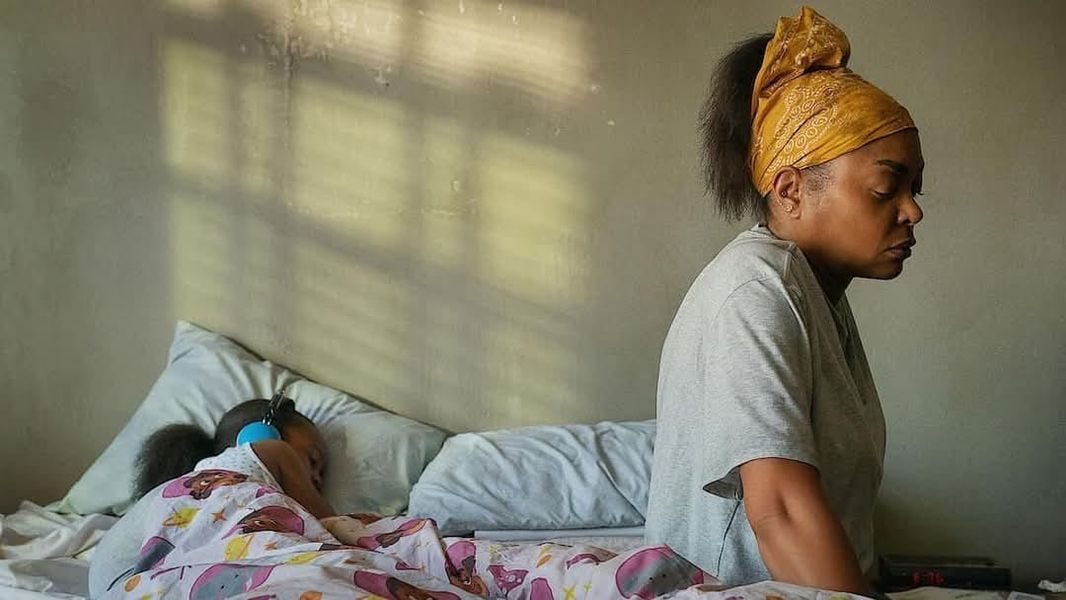
If you don’t break the cycle, life will eventually break it for you. Annie Lee taught us that you can turn “Blue Monday” into a masterpiece, but only if you’re willing to stop sitting on the edge of the bed and start moving toward something else.
I don’t know if I’m ready to break my cycle today, maybe I will, maybe I won’t, I’m only 23 I think I still have time to chase my habits. But I know I can’t carry any more straws.
References